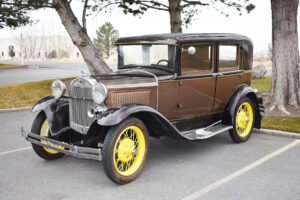


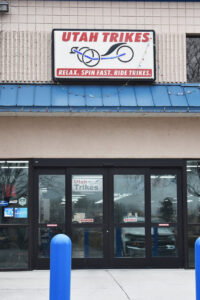
It was a cold January morning with a hint of snow dusting the pavement. Six intrepid Model A drivers drove their vehicles (all of them closed cars, by the way) to Utah Trikes in Springville, Utah. Sixteen club members were hosted by the company’s leaders for an hour and a half. The trikes and quads produced here are heavy-duty machines that are designed to take off-road punishment. The one feature that sets their product line apart is the recumbent design. This is where the driver sits in a chair instead upon a narrow seat and the pedals are placed in the front of the bike rather than under the rider.
I asked what the advantages would be of a recumbent design. The first is the comfort of a chair like seat at an angle that takes pressure off the bottom of the spine and hips. Having the pedals in the front is a better ergonomic position for the rider. The tricycle design results in greater stability, particularly for individuals who may have some physical limitations.
Utah Trikes has developed custom models that address specific types of special needs, giving mobility to those who couldn’t otherwise ride a bicycle. Consider a stroke survivor who still needs and wants exercise. They made a trike that was operated by one hand where pedals would not be usable. They have designed vehicles that accommodate physical therapy needs and worked with the Veteran’s Administration to develop them.
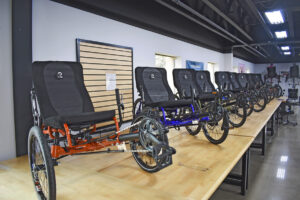
Our tour took us through the showroom area where trikes were lined up, ready for sale and delivery. From there, we were taken to the production area. These trikes and quads are all hand-assembled from many parts. Even the wheels are laced with spokes which are tensioned and trued in their factory. It takes a specialist about an hour and a half to lace one wheel. Spoke patterns vary depending on the intended use.
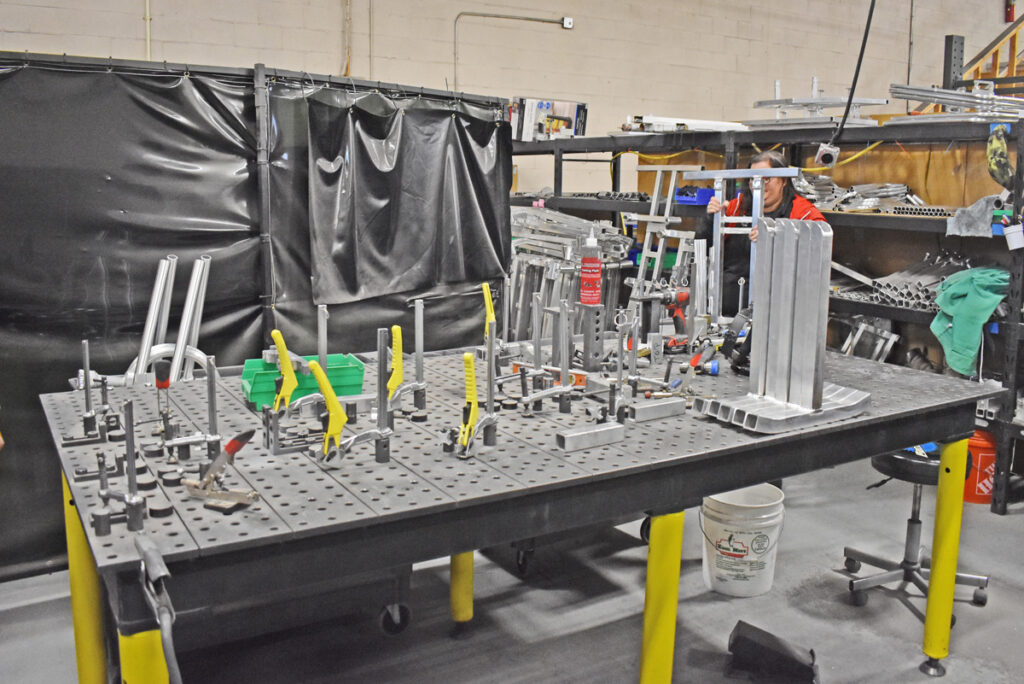
The frames are fabricated from extruded aluminum and welded on a jig table. Some of the frame parts must be bent to accommodate steering geometry. We were told that there is a short time of about 18 hours from the extruding process to the bending operation to avoid cracking the aluminum. The molecules of aluminum join together more tightly during the curing process after extrusion. Bending prior to this fully cured state is possible without fracturing the metal.
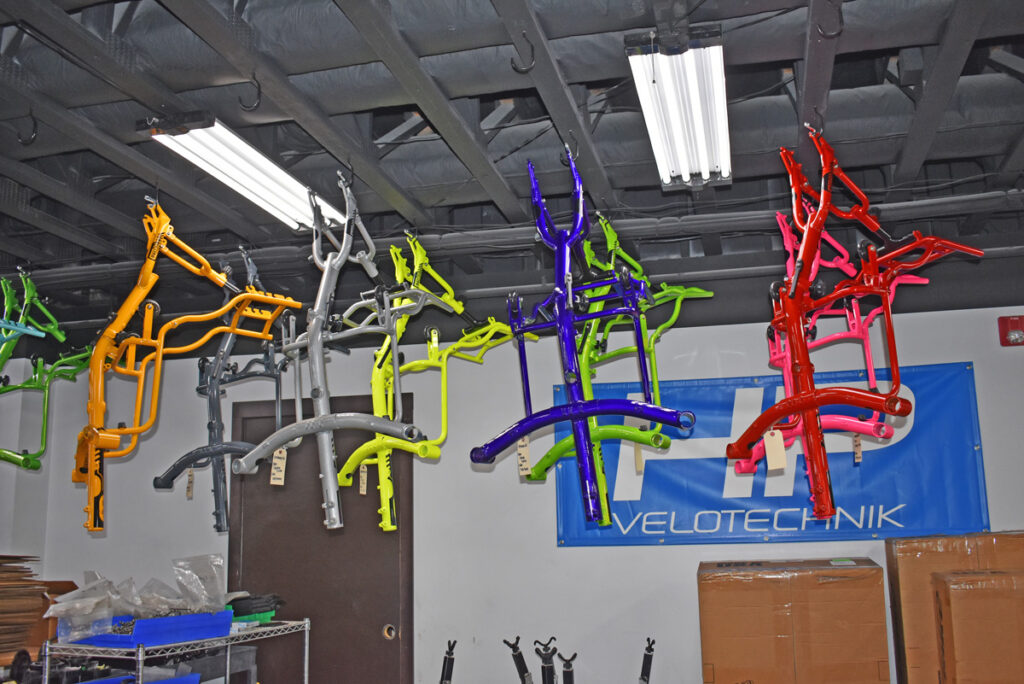
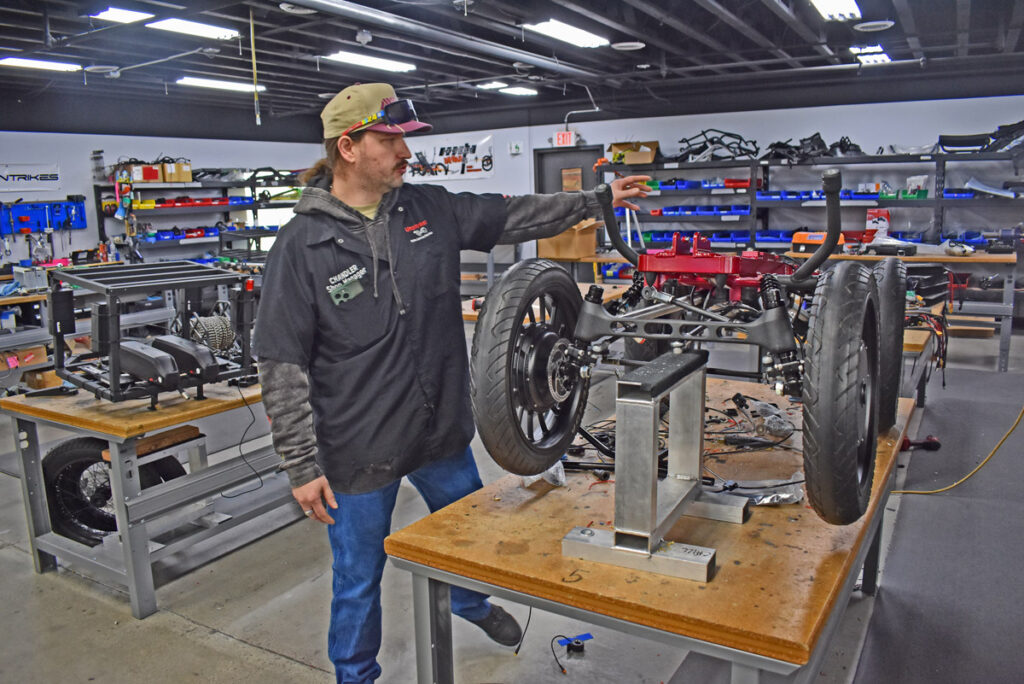
Every successful company needs to turn out new products. Prototypes are hand-made and assembled for evaluation before going into production. We saw a four-wheel drive electric quad in the evaluation stage. It is intended for serious off-roading. It can be altered to meet the needs of a person with disabilities who still has a love for the outdoors and off-road adventures. The finish applied to the frames is powder coating. This process requires media blasting, application of the coating, and heating for 30 minutes at 400 degrees F. All the equipment needed for powder coating is in-house. I saw color sample frames hanging from the ceiling.
After touring the factory, we were invited to try riding the trikes and quads. Without hesitation, Laurel asked to be the first. Chandler, the shop manager, adjusted the pedal apparatus to conform to her leg length. Notice the giant tires and cargo rack on the back. This is one serious buggy. Steering is performed by the two tillers over the front wheels. Other members of our group took turns on some of the machines. Greg got on an electric trike and was seen zipping through the parking lot hell bent for leather.
This was the first time I’ve ridden a recumbent trike. I liked it a lot. Other club members took turns and really enjoyed themselves.
The club wishes to offer a huge, Thank You, to our two hosts Courtney and Chandler, at Utah Trikes, for taking their day off to conduct our club on this excellent tour of their facilities.